Twenty Nautical Miles to the Edge of Greece
The Diapontia Islands do not appear in most Corfu itineraries. They sit northwest of the main island, scattered across a stretch of open water where the Ionian Sea meets the Adriatic. Othonoi, the largest, is the westernmost inhabited point in Greece — a fact that means nothing on a map but everything when you are standing on its harbour wall, looking west across empty water toward Italy, with nothing in between but sea and sky.
Erikoussa lies to the east, a low island with a single village and a crescent of sand that wraps around a shallow bay. Mathraki, the smallest of the three, is little more than a green hillock with a handful of houses and a chapel on the ridge. Together, these three islands form a micro-archipelago that feels removed from modern Greek tourism by about fifty years and several hundred kilometres.
Getting there takes commitment — roughly ninety minutes of open-water cruising from Gouvia Marina, depending on the vessel and sea conditions. But the crossing itself is part of the reward. The mainland and Corfu drop behind you, the horizon widens, and the water changes from coastal green to deep oceanic blue. Dolphins appear on this crossing more often than not, riding the bow wave or surfacing in small pods off the stern.
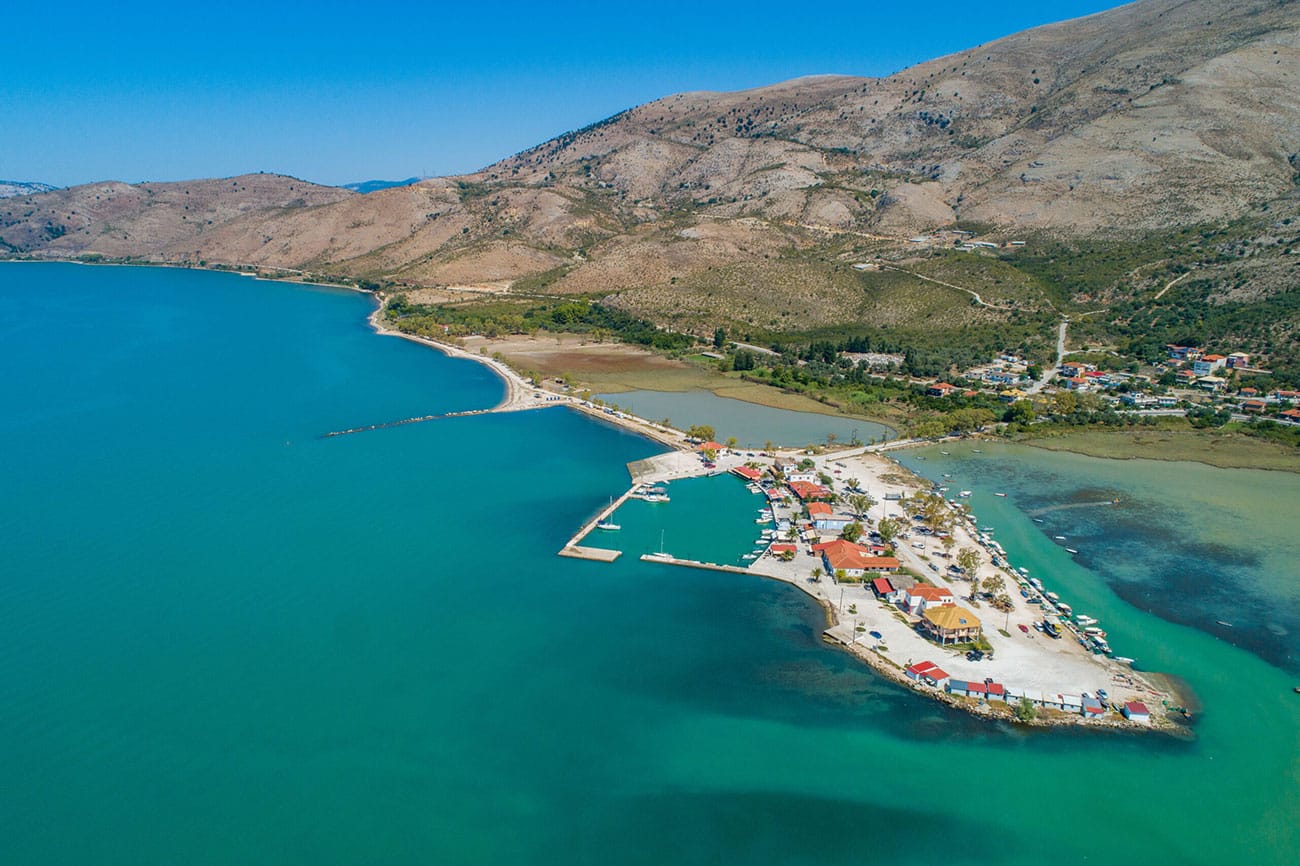
Erikoussa: The Beach That Empties Your Mind
Most Diapontia tours begin at Erikoussa, and the reason is immediately obvious. The main beach, Porto, curves for several hundred metres around a bay of shallow, warm water over a sandy bottom. The colour is that specific shade of turquoise that travel photographers spend careers chasing — the water so clear that your shadow on the seabed is sharper than your reflection on the surface.
Behind the beach, a single unpaved road leads to the village, where a handful of tavernas serve fresh fish, Greek salad with tomatoes that actually taste like tomatoes, and carafes of rough local wine. The pace here is profoundly slow. Cats sleep on doorsteps. Old men play tavli on the harbour. Nothing happens with any urgency, and after an hour, you stop expecting it to.
The waters around Erikoussa are excellent for snorkelling — rocky outcrops on the edges of the bay create habitats for wrasse, damselfish, and the occasional octopus, and the visibility rarely drops below eight metres even after weather.
Othonoi: Where Greece Ends
Othonoi is larger, hillier, and wilder than Erikoussa. The main harbour is small — room for a dozen boats and a stone quay that has not changed much in a century. Behind the harbour, a steep road climbs to the upper village, and from there, footpaths lead across the island to beaches and coves on the far side that feel as remote as anywhere in the Mediterranean.
The swimming here is different from the sheltered bays of Corfu’s east coast. The water is deeper, cooler, and coloured a more intense blue. Rock formations on the western shore create natural swimming pools and overhangs where the light filters down in shifting patterns. It is a place for people who find their peace in deep water and wide horizons.
According to some interpretations of Homer, Othonoi is the island of Calypso, where Odysseus was held for seven years. Standing on the western cliffs with nothing but sea ahead of you, the myth feels less like a prison sentence and more like a reasonable decision.

Mathraki: The Quiet One
Mathraki has a resident population that hovers around thirty. There is one beach, one taverna, one chapel, and a silence so complete that the sound of your own breathing feels loud. The island is small enough to walk around in under two hours, and the views from its single ridge encompass the entire Diapontia group, the distant bulk of Corfu, and on clear days, the mountains of Albania and the Italian coast.
Not every Diapontia tour includes Mathraki — the sea conditions and available time dictate whether a third stop is feasible. But when conditions allow, it is worth the detour. Mathraki is the kind of place that reminds you what islands were like before airports and mass tourism arrived.
The Tour: What to Expect
Unser Diapontia Islands full-day tour departs from Gouvia Marina in the morning and returns in the late afternoon. The crossing is made aboard one of our larger vessels — the Sea Ray Sundancer 370 “Passion V” — built for open-water comfort with a cabin, shade, and a stable ride. Hotel transfers are included, along with towels, snorkelling equipment, drinks, sea scooters, and a GoPro camera for underwater footage.
The itinerary typically covers two of the three islands, with swimming stops at each and time ashore for lunch and exploration. Your skipper adjusts the route based on weather, wind direction, and your preferences — if you want more swimming time and less village exploration, or vice versa, the day bends to suit you.
This is the most adventurous tour we offer from Corfu, and it appeals to travellers who have already explored the standard Paxos and northeast coast routes. If you are returning to Corfu for a second or third time and want something genuinely different, the Diapontia Islands deliver. See all our routes on the boat rental page.
Frequently Asked Questions
How long does it take to reach the Diapontia Islands from Corfu?
The crossing from Gouvia Marina to Erikoussa takes approximately 75 to 90 minutes, depending on the vessel and sea state. The journey passes through open water, so calm weather days are preferred for this route.
Is the Diapontia tour suitable for children?
The tour works well for families with children aged six and above who are comfortable with a longer boat ride. The beaches at Erikoussa are shallow and sandy, making them excellent for young swimmers. For families with very young children, we generally recommend the shorter northeast coast half-day tour instead.
What makes this tour different from the Paxos full-day tour?
The Paxos tour heads south and focuses on dramatic sea caves, cliff scenery, and the famous turquoise beaches of Antipaxos. The Diapontia tour heads northwest into more remote territory, offering a quieter, more off-the-beaten-path atmosphere with traditional island villages and a genuine sense of discovery. Both are full-day experiences, but they feel completely different.
Can I visit all three Diapontia Islands in one day?
It depends on conditions. Two islands are standard, with generous time at each for swimming, snorkelling, and lunch. On long summer days with calm seas, a brief third stop at Mathraki is sometimes possible. Your skipper will advise based on the day’s conditions.
Reach the Edge of the Map
The Diapontia Islands represent something increasingly rare in the Mediterranean — genuine remoteness without roughing it. You reach them on a comfortable, well-equipped boat, swim in water that has seen almost no tourist traffic, eat at tavernas where the menu is whatever was caught that morning, and return to Corfu with the feeling that you have been somewhere most visitors never find. Contact us to book your Diapontia Islands day.


 English
 Ελληνικά
 Italiano
 Français
 Deutsch
 Español
 Română
 עִבְרִית