The northwest coast of Corfu is where the island stops being gentle. South-facing cliffs give way to vertical limestone walls carved by millennia of Ionian storms, sea caves open into chambers lit electric blue from below, and the beaches — when they appear — are tucked into folds of rock that feel like they were designed to be discovered by boat and nothing else. This is not the Corfu of resort pools and cocktail menus. This is the older, wilder version, and a full day on the water is the only honest way to see it.
Why the northwest demands a boat
Roads exist along parts of this coast, but they are winding, narrow, and end abruptly at cliff edges. The most striking beaches — Porto Timoni’s twin bays, the sea caves below Paleokastritsa — require either a demanding hike or a short ride across the water. A private boat charter eliminates the logistics entirely. You step aboard at Gouvia Marina, and by mid-morning you are anchored in water so clear that the anchor chain casts a shadow on the sand four metres below.

The route: a coast of contrasts
Cape Drastis and the white clay cliffs
The day begins with a run north past the resort strip of Sidari and around Cape Drastis, where white clay cliffs have been sculpted into pillars, arches, and flat-topped mushroom shapes by wind and wave. Seen from sea level, the formations are otherworldly — bleached white against the deep blue water, with patches of scrubby green vegetation clinging to the tops. The cape is exposed to open sea, so the water here has a different energy: deeper swells, darker colour, and a sense of scale that puts the rest of the coast into perspective.
Canal d’Amour
South of Sidari, the Canal d’Amour is a narrow channel cut through sandstone, wide enough for a single boat to idle through. Local legend promises that couples who swim its length together will marry, which accounts for the nervous laughter you hear echoing off the walls on summer mornings. The rock is layered in ochre and cream stripes, and the water inside the channel shifts colour depending on the sun angle — pale green at midday, deep amber in the late afternoon. Your skipper will hold the boat steady at the entrance while you swim through.
Porto Timoni: the double bay
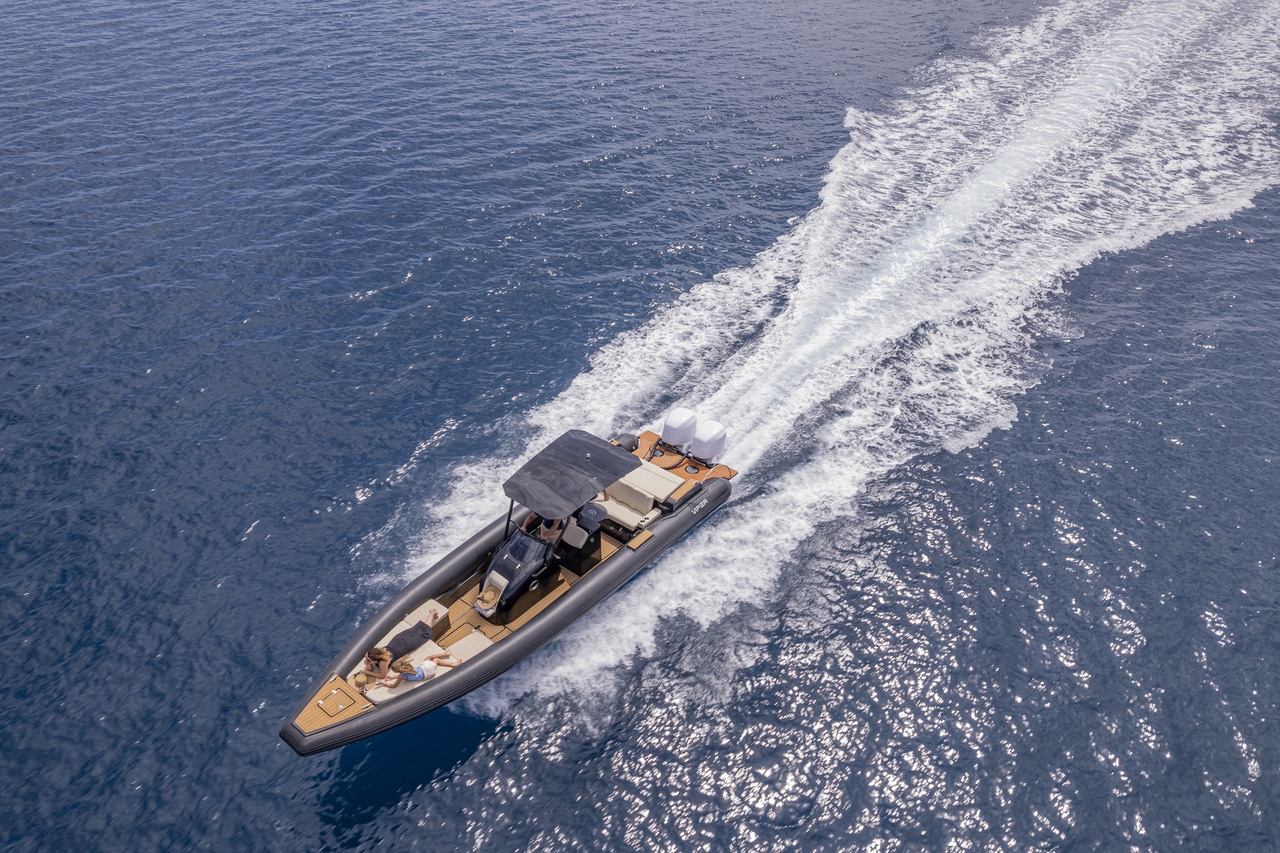
Porto Timoni is the photograph that sells northwest Corfu, and it deserves its reputation. A narrow isthmus of scrub-covered rock separates two bays that face in opposite directions — one toward the open Ionian, one sheltered and facing south. From above, the shape is unmistakable: two crescents of pale pebble beach joined at the hip. By boat, you can anchor in the sheltered southern bay, swim to the isthmus, and walk the thirty seconds to the exposed northern side where the water is colder, choppier, and a shade of blue that borders on violet. The hiking trail from Afionas village takes forty-five minutes each way on a steep, rocky path with no shade. Arriving by Viper speedboat takes about twelve.

Paleokastritsa: six bays and a monastery
Paleokastritsa is not one beach but six distinct bays arranged around a headland crowned by the Theotokos Monastery, which has occupied the site since the thirteenth century. The monks still tend gardens inside the walls, and a small museum displays Byzantine icons and olive presses. But the real attraction is below the waterline. The sea caves at the base of the headland — Nafsika’s Grotto, the Blue Eye — are accessible only by boat, and inside them the light does something extraordinary: sunlight enters through submerged openings, bounces off the white limestone floor, and fills the cave with a luminous blue glow that shifts and pulses with the swell. Snorkelling here, surrounded by that light, is one of the genuinely transcendent experiences available in the Ionian.
Liapades and the hidden beach
South of Paleokastritsa, the village of Liapades guards a coastline riddled with caves and tiny beaches. Paradise Beach — the name is overused across Greece, but this one earns it — is a sliver of golden sand accessible only by sea, backed by a sheer cliff wall. In the shoulder months of May and early October, you may have it entirely to yourself. The water is shallow for a long way out, making it ideal for floating on your back and staring at the sky while the cliff walls frame your view.
Lunch and the afternoon rhythm
Most guests choose to break for lunch in Paleokastritsa, where the tavernas along the main bay serve grilled calamari, village salads with feta so fresh it crumbles at the touch of a fork, and cold Mythos beer in glasses that fog immediately in the heat. The afternoon pace slows. Swimming stops get longer, conversations drift, and the captain knows to find the bays where the afternoon sun warms the cliffs and the water temperature rises a degree or two. By the time you round the northern tip of Corfu on the return leg, the light has gone golden and the Albanian mountains across the strait have turned a deep purple.
Which boat for the northwest
The northwest coast involves some open-water stretches, particularly around Cape Drastis, so a boat with decent seakeeping matters. The Sea Ray Sundancer 370 “Passion V” handles the swell comfortably while offering a generous swim platform and sun deck. For couples or small groups who want agility and speed, the VIPER Γρηγόρης can tuck into caves and coves that larger vessels cannot reach. The Magna 35C Asteroessa strikes a balance between space and manoeuvrability, making it a solid choice for groups of four to six. Check the full-day northwest Corfu tour page for detailed itineraries and availability.
Practical notes
The tour departs Gouvia Marina around 09:30 and returns by 17:30, covering approximately 50 nautical miles. The northwest is more exposed to wind than the sheltered east coast, so the captain may adjust the order of stops based on morning conditions. Bring reef-safe sunscreen, a hat, and shoes with grip for any cliff scrambling. Snorkelling equipment is on board. Water, soft drinks, and a selection of local wines and snacks are provided, though many guests prefer to save their appetite for the taverna stop.
Frequently asked questions
Is the northwest coast rougher than the northeast?
It can be, particularly around Cape Drastis where the coast faces open water. However, the bays themselves — Paleokastritsa, Porto Timoni, Canal d’Amour — are sheltered and calm. Your captain monitors conditions and adjusts the route accordingly.
Can we enter the sea caves at Paleokastritsa?
Yes. Smaller vessels can motor directly into several of the caves, while swimmers and snorkellers can access all of them. The Blue Eye cave in particular is worth the swim — the underwater light effect is remarkable.
How does this tour compare to the northeast route?
The northeast is gentler — sheltered waters, charming fishing villages, excellent tavernas. The northwest is more dramatic — towering cliffs, sea caves, wilder scenery. Many guests do both on separate days to experience the full range of what Corfu offers from the sea.
Is Porto Timoni as impressive as the photos suggest?
More so. Photographs flatten the scale. Standing on the isthmus between two bays, with the Ionian stretching in both directions and the green hills of Afionas above, is one of those moments that stops you mid-sentence.
Reserve your day on the northwest coast
The northwest coast is Corfu showing off — dramatic, cinematic, and best experienced at the pace a private boat allows. Whether you spend your afternoon snorkelling through electric-blue caves or simply watching the cliff shadows lengthen from the deck of a sun-warmed boat, this is a day that earns its place in the highlight reel. Contact SeaDreamers to plan your route and choose a departure date.


 English
  Greek
Greek  Italian
  German
  Spanish
  Romanian
  Hebrew