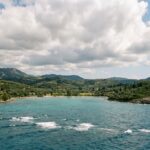
Paxos appears on the horizon about an hour south of Corfu — a low ridge of dark green cypresses and pale limestone, barely ten kilometres long, floating in water that has no business being that blue. Antipaxos, its smaller companion, is little more than a vine-covered hill with two beaches so beautiful they have become a kind of open secret among Ionian travellers. Together, these islands represent one of the finest day trips in all of Greece, and the crossing from Corfu by private boat turns the journey itself into half the experience.
The crossing: Corfu to Paxos
Το Paxos and Antipaxos full-day tour departs from Gouvia Marina and heads south along Corfu’s eastern shore, past the airport runway where planes seem to skim the water on approach, past the low-slung peninsula of Kanoni, and into the open channel between Corfu and the mainland. The crossing takes roughly sixty to ninety minutes depending on the vessel and sea state. On calm days the water is a flat, dark blue expanse with nothing between you and the horizon but the occasional fishing boat and the distant silhouette of the islands slowly sharpening into detail.
Antipaxos: two beaches, zero pretension
Most itineraries visit Antipaxos first, before the midday crowds arrive by excursion boat from Gaios. The island has no hotels, no nightlife, and a permanent population that hovers around twenty. What it has are Voutoumi and Vrika — two beaches that routinely appear on “best in the Mediterranean” lists and genuinely justify the ranking.
Παραλία Βουτούμι
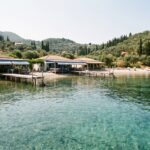
Voutoumi sits in a cove backed by a steep hillside covered in scrub oak and wild olive. The pebbles are small and smooth, the colour of old ivory, and the water is the kind of Caribbean-grade turquoise that makes you check whether you are still in Greece. The seabed is white sand and scattered rock, and visibility on a still morning reaches fifteen metres easily. A single taverna operates above the beach, serving simple plates of fried fish and cold beer, but most of the draw is in the water itself — warm, impossibly clear, and calm enough for children to wade out comfortably.
Vrika Beach
Just around the headland, Vrika is sandier and marginally more developed, with a beach bar and sunbeds that appear in season. The water is equally spectacular. Together, the two beaches occupy less than a kilometre of coastline, but they pack more visual impact per square metre than anywhere else in the Ionian chain.
The sea caves of Paxos
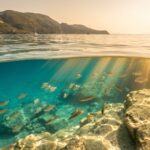
The western coast of Paxos is a wall of sheer limestone cliffs rising forty metres from the sea, punctured by caves that the waves have hollowed out over thousands of years. The most famous — Ipapanti, Ortholithos, Kastanida — are tall enough for a small boat to enter and deep enough that the sound of the engine echoes and distorts into something almost musical. Inside, the water glows an electric blue-green from sunlight filtering through the submerged entrances, and the rock walls are streaked with mineral deposits in rust, cream, and grey. The Ortholithos sea stack — a free-standing column of rock separated from the cliff — is a landmark visible from miles away and a favourite photo stop.
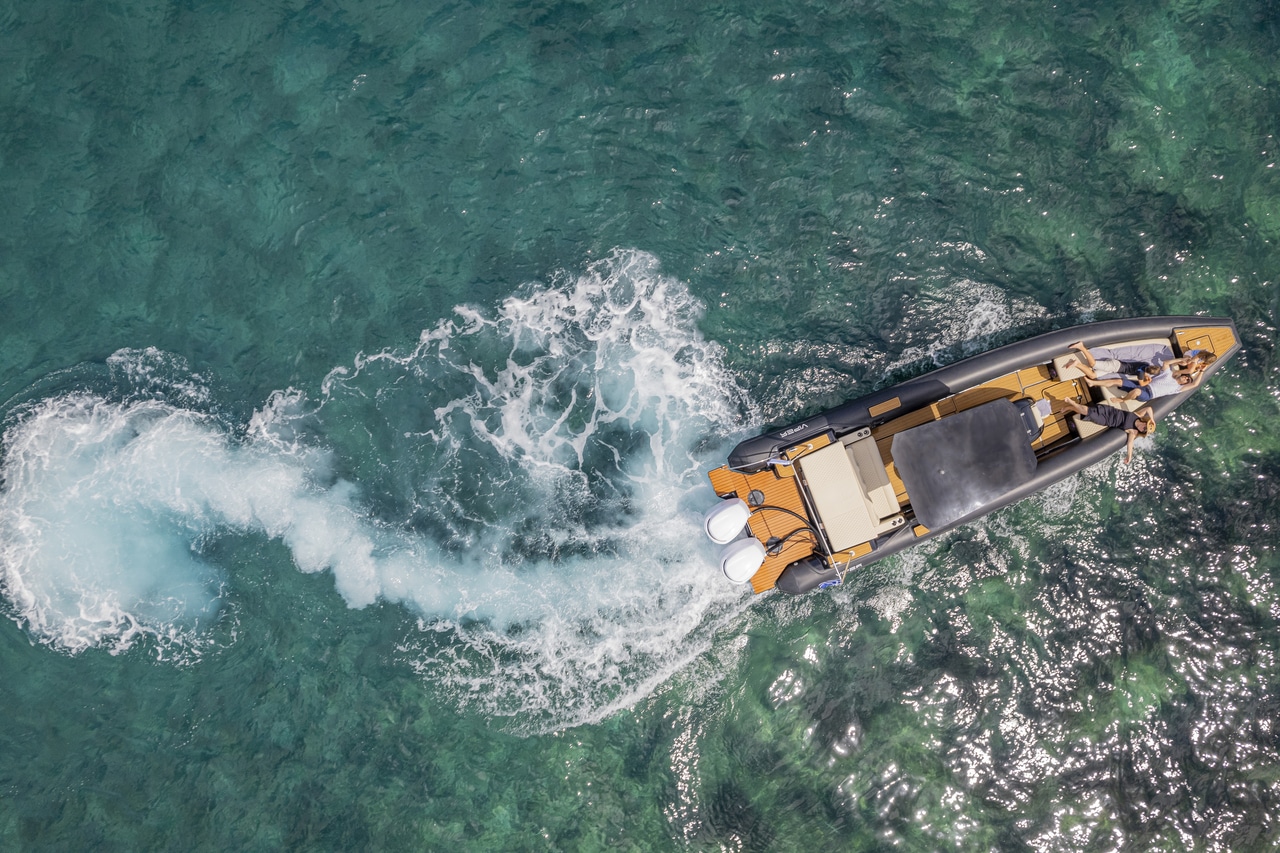
For those aboard the VIPER Γρηγόρης or similar compact vessel, the captain can nose directly into several of the caves. Passengers on the larger Sea Ray Sundancer 370 will anchor outside and swim in — which is arguably the more dramatic approach, since you feel the scale of the cave walls rising around you as you paddle through the entrance.
Gaios: the harbour town
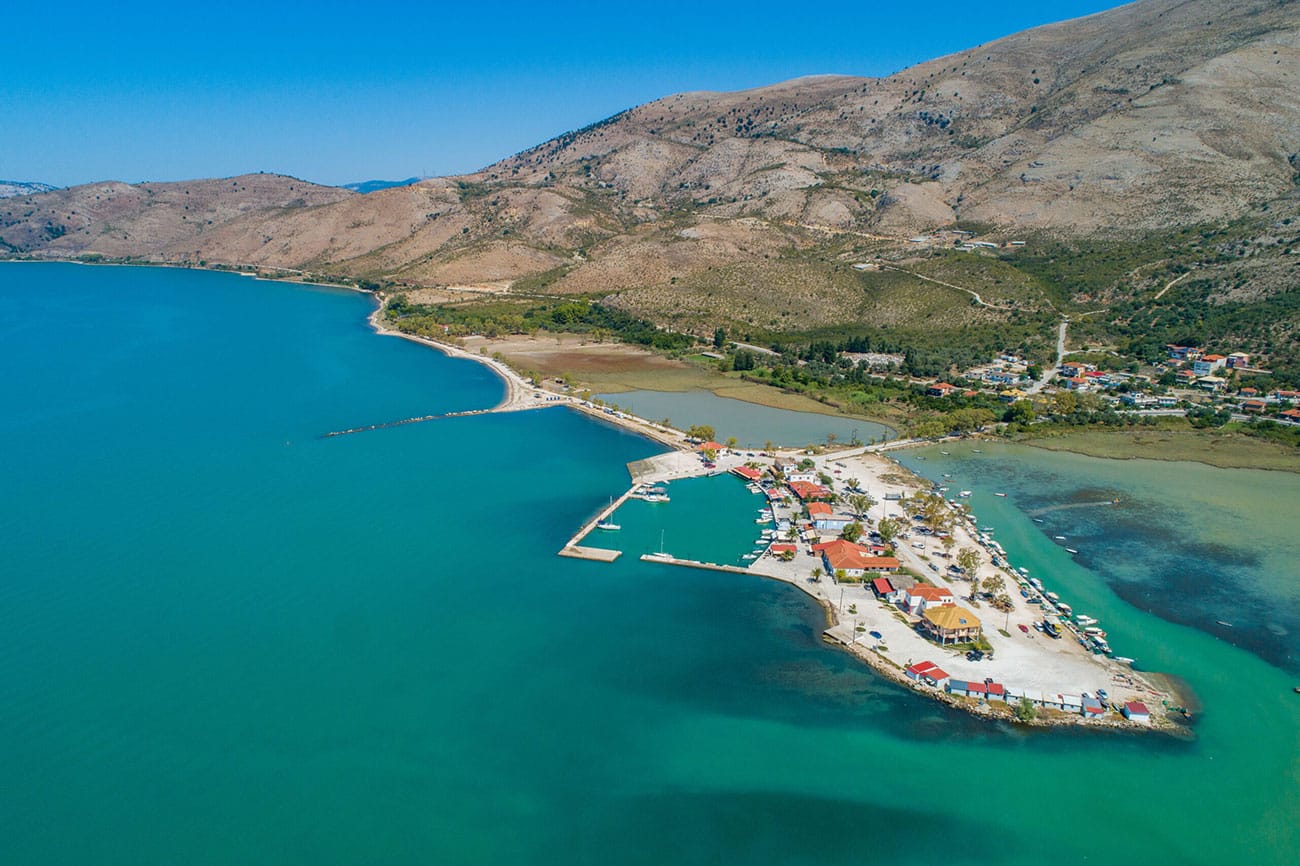
The main settlement of Paxos is Gaios, a harbour town built around a narrow channel sheltered by two small islands — Agios Nikolaos with its Venetian fortress and Panagia with its monastery and pine forest. Arriving by boat, you slip through this channel and tie up along the waterfront where pastel-coloured houses line the quay and cats doze on mooring ropes. Gaios operates at a pace that makes even Corfu feel frantic. The waterfront tavernas serve fresh pasta with lobster, local wine from Antipaxos vineyards, and octopus dried on lines in the sun. An hour here is enough to walk the main street, browse the handful of shops selling olive oil and local honey, and feel the particular calm that small Greek islands do better than anywhere else on earth.
The return and the golden hour
The return crossing to Corfu in the late afternoon is one of the day’s quiet highlights. The sun drops toward the western horizon, turning the sea from blue to copper, and the outline of Corfu’s mountains becomes a dark silhouette against the sky. The aft deck becomes a natural viewing platform. There is no rush on this leg — the captain takes the direct line home, the engine settles into a steady rhythm, and the day’s swimming and sun catch up with you in the best possible way.
Choosing your vessel
The Paxos crossing involves open water, so vessel choice matters. The Passion V offers the most comfortable ride in any conditions, with a full cabin, sun deck, and swim platform. The Asteroessa is excellent for mid-size groups who want both speed and comfort. For couples or small groups seeking a sportier experience, the Viper boats deliver a thrilling ride across the channel. All vessels are equipped with snorkelling gear, fresh towels, and refreshments for the day. Browse the full yacht rental options to find the right fit.
Practical information
The tour departs Gouvia Marina at 09:00 and returns around 18:00. The crossing is weather-dependent — on days with strong southerly winds, the captain may adjust the route or suggest the sheltered northeast coast as an alternative. Bring swimwear, sun protection, and a light jacket for the return crossing when the breeze can feel cool against sun-warmed skin. Cash is useful in Gaios as some smaller shops do not accept cards.

Frequently asked questions
How long is the boat ride from Corfu to Paxos?
The crossing takes approximately 60 to 90 minutes depending on sea conditions and the vessel. The route passes along Corfu’s eastern coast before heading into open water toward the islands.
Is the Paxos trip suitable for people prone to seasickness?
On calm days the crossing is smooth and comfortable. If you are sensitive to motion, the larger vessels like the Passion V offer a more stable ride. The captain always checks conditions before departure and will advise honestly about what to expect.
Can we spend more time on Antipaxos and skip Gaios?
The itinerary is fully flexible on a private charter. If you want to spend the entire afternoon swimming at Voutoumi, the captain will make it happen. That said, Gaios is worth at least an hour — the harbour alone is one of the most photogenic spots in the Ionian.
What is the best time of year for this tour?
Late May through early October. June and September offer the best balance of warm water, manageable crowds, and reliable weather. July and August are peak season with warmer water but busier beaches, particularly at Voutoumi.
Book your Paxos and Antipaxos day
A day spent between Paxos and Antipaxos is the kind of experience that resets your understanding of what a Greek island can look and feel like. The water is absurd, the food is honest, and the pace reminds you what holidays are supposed to be. Reach out to SeaDreamers to set the date and build your perfect Paxos boat trip itinerary.
 English
 Ελληνικά
 Italiano
 Français
 Deutsch
 Español
 Română
 עִבְרִית