The morning air at Gouvia Marina carries the faint scent of salt and pine resin, and by the time the engine rumbles to life beneath your feet, Corfu Town is already shrinking behind the stern. Ahead lies the northeast coast — a stretch of shoreline that locals consider the island’s quietest secret, where Albanian mountains hover on the horizon like a mirage and the water shifts from cobalt to a glassy, impossible turquoise that photographs never quite capture.
What makes the northeast coast different
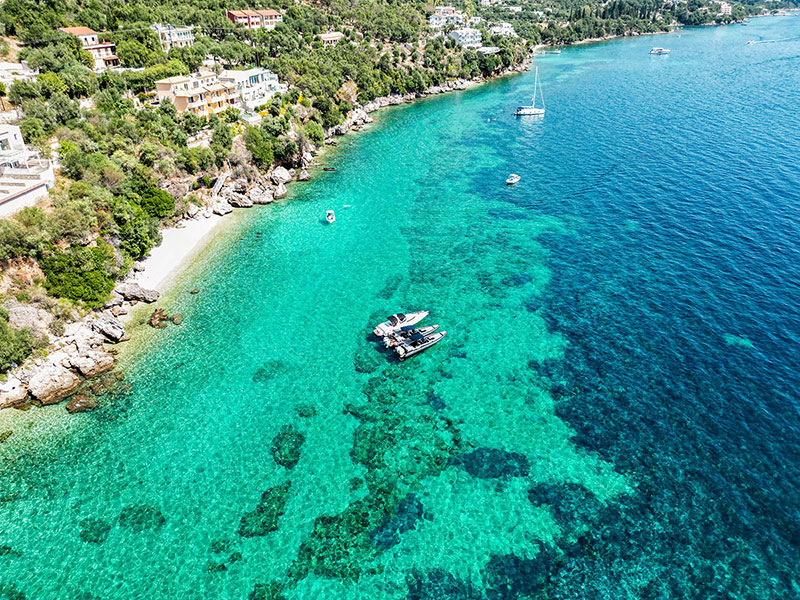
Most visitors to Corfu gravitate west, chasing sunsets at Paleokastritsa or the postcard cliffs of Sidari. The northeast rewards patience with something rarer: calm Adriatic-facing waters sheltered by the mass of mainland Greece barely two kilometres away, hillside olive groves that tumble directly into the sea, and a chain of fishing hamlets — Kouloura, Kalami, Agni — that still operate at a pace dictated by the catch rather than the cruise ship schedule. A full-day private boat tour is the only way to thread them together without surrendering half the day to hairpin mountain roads.
The route: Gouvia to Kassiopi and back
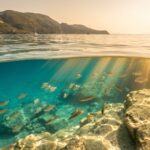
Departing from Gouvia, the boat hugs the coast northward. Within twenty minutes the concrete of Kontokali gives way to thick cypress stands and the first ribbon of pebble beach appears below the village of Barbati. The seabed here is visible at six or seven metres — bands of sand broken by dark seagrass meadows where damselfish flicker in and out of view.
Kouloura: the horseshoe harbour
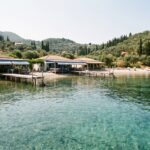
Kouloura is little more than a crescent of stone wall protecting a handful of fishing boats. The single taverna perched above the water has served grilled octopus to Gerald Durrell fans and Greek presidents alike, though it never seems crowded. From the water the proportions are perfect — a miniature harbour framed by cypress and olive, the kind of scene that sells calendars for a reason. Your skipper will idle the engines here long enough for a swim, and the water temperature in the shallows stays warmer than anywhere else on the island thanks to the narrow channel between Corfu and the mainland trapping the heat.
Kalami and the White House
A few minutes further north, the white facade of the Durrell family house sits right at the waterline in Kalami Bay. Lawrence Durrell wrote Prospero’s Cell from this building in the late 1930s, and the bay he described — “wood-smoke and cypresses, water-lilies, turquoise sea” — has changed remarkably little. The bay is deep enough to anchor close to shore, and snorkelling along the rocky western edge reveals sea urchins, small grouper, and the occasional octopus tucked into the limestone crevices.
Agni Bay: lunch on the water
Agni is where the serious eating happens. Three tavernas share a crescent of white pebbles, each with tables practically in the water. Nikolas serves whole sea bream grilled over charcoal; Toula’s does a slow-cooked lamb kleftiko that regulars cross the island for. Your captain can radio ahead to reserve a table or, if you prefer, anchor in the bay and have platters ferried out by dinghy — a peculiar local custom that feels absurdly luxurious.
Kassiopi and the fortress
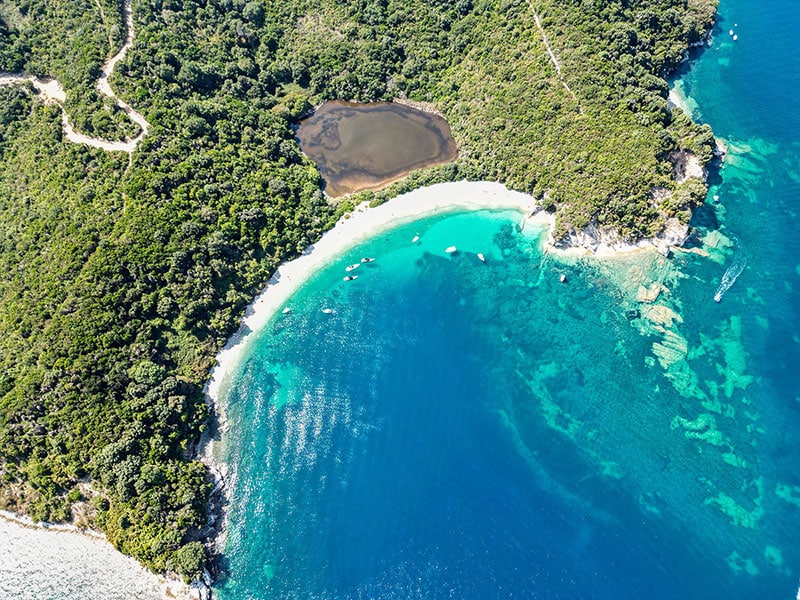
The northernmost stop is Kassiopi, a harbour town backed by the ruins of a Byzantine fortress that once watched over the strait toward Albania. Cicero visited here; Nero reportedly sang. Today the fortress walls are open to anyone willing to climb, and the views from the top stretch across to the grey peaks of Butrint in Albania and south along the entire northeast coast you have just traversed. Back down at harbour level, the ice cream from the gelateria on the main square is worth the walk.
Swimming stops you will not find on Google Maps
Between the named bays, the northeast coast hides a series of narrow inlets accessible only by boat. Your skipper knows them by local nicknames rather than official designations — the “cathedral” cove north of Nissaki where cliff walls rise twenty metres on either side and sound echoes like a stone church, or the flat limestone shelf near Kerasia where the rock has been polished smooth enough to lie on and the water is shallow and warm enough to wade out fifty metres before it reaches your waist. These are the stops that turn a boat tour from a sightseeing exercise into something you remember years later.
Choosing the right boat
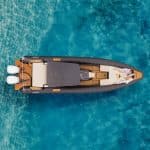
The northeast coast suits a range of vessels. The Viper Grigoris is nimble enough to nose into tight coves and fast enough to cover the full route comfortably. For larger groups or those who want a sun deck and swim platform, the Sea Ray Sundancer 370 “Passion V” turns the journey into a floating lounge. Whichever you choose, the full-day northeast Corfu itinerary covers roughly 45 nautical miles round trip, with plenty of time at each stop to swim, eat, explore, and simply drift.
Practical details
Departure is typically at 09:30 from Gouvia Marina, returning by 17:30. The sea on the northeast side is sheltered from the prevailing northwesterly wind, making it one of the calmest routes available even on days when the west coast is rough. Bring swimwear, sun protection, and a light layer for the return leg when the breeze picks up. Snorkelling gear is provided on board. The crew carries fresh water, soft drinks, and local wine, though you are welcome to bring your own provisions.

Frequently asked questions
How long does the northeast Corfu boat tour take?
The full-day tour runs approximately eight hours, departing Gouvia Marina around 09:30 and returning by 17:30. The pace is unhurried, with multiple swimming and dining stops built into the route.
Is the northeast coast suitable for children?
Very much so. The sheltered waters are consistently calm, many of the swimming spots have gradual entries, and the crew adjusts the itinerary based on the group.
Can we stop for lunch at a taverna or do we eat on board?
Both options are available. Most guests choose to stop at one of the seaside tavernas in Agni or Kalami for a proper Greek lunch. Alternatively, the crew can arrange a light meal on board so you spend more time swimming.
What if the weather turns rough?
The northeast coast is the most weather-protected route in Corfu. On the rare occasions when conditions are unfavourable, your captain will adjust the itinerary or suggest an alternative route. Safety always comes first, and the team monitors forecasts closely before every departure.
Book your northeast Corfu tour
The northeast coast is Corfu at its most authentic — no beach bars blasting music, no parasol rows, just olive-covered hills dropping into transparent water and a handful of villages that still feel genuinely Greek. A full day here, with nothing to do but swim and eat and watch the light change on the Albanian mountains, is the kind of holiday memory that outlasts any souvenir. Get in touch with SeaDreamers to reserve your date and choose the vessel that suits your group.

 English
 Ελληνικά
 Italiano
 Français
 Deutsch
 Español
 Română
 עִבְרִית